



Abstract
This is a brief summary of my dissertation, “Agrarian Change and Emotional Struggles over Land, Labor, and Mobility: Subjectivity Formation amongst Myanmar Youth in Thailand” (2024).
While young people are growing up with socio-economic and technological changes that create new opportunities, rural youth in the Global South are often excluded from reaching the benefits of these developments. To establish independent livelihoods and transition to adulthood, many migrate across borders. Yet, while rural areas are often perceived as sending rather than receiving migrants, many migrants today end up working as cheap, flexible labor in agricultural sectors. This is the case for young migrants from Myanmar’s rural areas in Thailand’s agricultural sector. Working under severe forms of exploitation and illegalization, the young migrants face both material and emotional challenges as they struggle to make ends meet and save up for their future aspiration of buying land in rural Myanmar.
Drawing on qualitative, ethnographic, and participatory visual methods, the dissertation emphasizes the importance of engaging with rural youth to offer new insights into how labor abroad can be seen as a struggle for land back in the areas of origin, not only for material reasons of establishing livelihoods but also for emotional connections to village life, family, friends, and even agricultural production. Such findings challenge common development discourses that portray youth as turning their backs on rural areas and agriculture and are crucial for supporting dignified rural livelihoods and promoting well-being.
Sofie Mortensen defended her thesis, “Agrarian Change and Emotional Struggles over Land, Labor, and Mobility: Subjectivity Formation amongst Myanmar Youth in Thailand,” in 2024 at the Department of Food and Resource Economics at the University of Copenhagen, Denmark. She draws on nearly 10 years of experience from the Southeast Asian context, studying differentiated outcomes of environmental change and development. In particular, she uses feminist and emotional perspectives to understand experiences of, and responses to, migration and exploitation, and the position of migrant laborers and farmers within wider agri-business value chains.
Background and rationale
Across the world, young people are growing up in rapidly changing societies that foster new opportunities. Yet for young people in rural areas of the Global South, access to material resources, education, and work opportunities remains limited (Cooper et al., 2021). Development and growth in rural areas continue to cause widespread dispossession and differentiation, separating small-scale farmers from their lands, while rural and urban labor markets are unable to absorb these farmers under fair and secure conditions (Munck, 2013, 2017; Shattuck et al., 2023). As stated in the Food and Agriculture Organization report ‘The Future of Food and Agriculture: Trends and Challenges’, “the single biggest global development challenge in the decades to come will be the need to integrate hundreds of millions of young people into the labour market” (FAO 2017, p. 141).
Rural-rural labor migration
Modernization and development discourses have long argued that, to escape poverty, rural populations should, in the long run, be encouraged to migrate to urban areas for jobs as the economy shifts from an agrarian-based to an industrialized and service-oriented economy (Timmer, 1988; 2009). The World Bank’s World Development Report ‘Agriculture for Development’, for example, urges small-scale farmers who can no longer compete in markets to exit agriculture (World Bank, 2008). Yet, in a more recent World Development Report, ‘Migrants, Refugees, and Societies,’ it is noted that the agricultural sector in industrial countries is now fully dependent on migrant labor (World Bank, 2023). Similarly, FAO stresses that employment in non-agricultural sectors is not growing fast enough and that agriculture must absorb a large share of the new generation of workers (FAO, 2017). While rural areas are often perceived as sending rather than receiving migrants, it is crucial to acknowledge that many migrants today end up working as cheap, flexible agrarian laborers (King, Lulle, and Melossi, 2021).
Agriculture and livelihood opportunities for youth
According to the recent International Fund for Agricultural Development ‘Rural Development Report: Creating Opportunities for Rural Youth,’ the continuing role of agriculture in young people’s lives poses a challenge. Indeed, the reportedly growing aspirations of young people are presented to close off traditional pathways to rural livelihoods (IFAD, 2019). However, this common policy representation of rural youth as turning their back on agriculture begs caution (White, 2021). For example, as also emphasized in the IFAD report, lack of access to land and other resources makes it “difficult for young people to seize opportunities for bettering their lives and contributing to the rural economy” (IFAD, 2019, p. 6). The growing scholarship on rural youth shows that even if young people want to engage in independent farming while still young, large-scale land developments, market integration, and increasing land scarcity restrict access to land and make this difficult, if not impossible (Park, 2021; White, 2021). The challenging conditions in rural areas raise the further question of whether young people leave voluntarily or are, in fact, pushed out. For some, migration seems the only alternative among a range of undesirable options (Harkins, 2019). It is therefore important to understand migration in relation to young people’s broader life aspirations, hopes, and motivations, and how some might also aspire to stay and later return (Schewel, 2015).
The context of Southeast Asia
These issues are very prevalent in a Southeast Asian context. Yet, despite widespread rural-rural youth migration between Myanmar and Thailand, we know little about why this group of young people migrates, the conditions they work under in Thailand’s agricultural sector, and how these factors impact both their well-being in the here and now and their future aspirations. Indeed, while migration is often presented as an economic gain, the question is for whom and with what emotional consequences (Bastia & Skeldon, 2020; Boccagni & Baldassar, 2015), as such narratives often neglect rural livelihoods as sites of care and reproduction (Rigg et al., 2018; Faxon, 2020).
To understand the lives and aspirations of rural youth, the dissertation used qualitative, ethnographic, and participatory visual methods. The findings contribute to a more comprehensive understanding of the land and labor struggles that young migrants face. It offers new insights into how labor abroad can be seen as a struggle for land back in the areas of origin, not only for material reasons of establishing livelihoods but also for emotional connections to the village life, family, friends, and even agricultural production. At the same time, exploitation and illegalization in Thailand’s agricultural sector have significant material and emotional implications for the young migrants who find it difficult to make ends meet, let alone save up for future aspirations. The current post-coup armed conflict in Myanmar has further prolonged their immediate dream of a swift return to Myanmar.
From a development cooperation perspective, this is highly relevant for Sweden. In line with The Swedish International Development Cooperation Agencies (Sida) focus on gender equality, youth inclusion, and rights-based approaches, the dissertation targets several key thematic areas, including agriculture and food security, employment, and migration and development. In doing so, the dissertation stresses the importance of development actors supporting the livelihoods and well-being of the many young Myanmar people who now work in Thailand’s agricultural sector and promote dignified ways of living. Further, the findings highlight that it is crucial for aid organizations to continue their work in Myanmar and Thailand to support the young generation in their brave efforts to secure a safe and just post-coup future.
Research aim and questions
The overall aim of the dissertation was to explore young people’s experiences of rural-rural migration between Myanmar and Thailand, and the squeeze young Myanmar migrants face, both in their place of origin and in their destination, materially and emotionally. In particular, the dissertation asked:
- What is the role of rural areas and land in young migrants’ lives?
- How are young migrants’ labor exploitation shaped by their class, citizenship, and gender in agro-industrial settings?
- How is the dual struggle young people face in rural areas of origin and destination impacting their emotional lives in the here and now and future?
Research design
To understand young people’s emotional experiences of labor exploitation and land struggles, the dissertation relied on qualitative, ethnographic, and participatory visual methods.
- One hundred life story interviews with 50 young women and 50 young men covering experiences of childhood, decision to migrate, the journey, conditions in Thailand, and future dreams.
- Forty “photovoices” with 20 young women and 20 young men. Photovoice is a participatory visual method where the participants, in this case, were instructed to take photographs of their everyday lives as migrants in Thailand. After a week of taking photos, we met with the participants individually, who each selected 10 photos. For each photo, we talked about why they took the photo, what it shows, how it makes them feel, and what title to give it. After the individual interviews, we conducted gender divided group discussions about the photos and common themes and issues they raised (see Mortensen & Questiaux, 2024).
- Twelve participatory visual mappings with six groups of young women and six groups of young men. This is another participatory visual method where the participants first showed us around in the migrant community. Afterwards, they drew a map of the community and its position within the wider rural district, adding points of interest and discussing issues of access and mobility.
- Key informant interviews with Thai farmers, Thai authorities, Myanmar school teachers, Myanmar village heads, and civil society organizations.
Young people, selected together with local field collaborators, were between 17 and 31 years old. However, what it means to be young, who is considered young, and how youth is experienced are not only determined by age but also vary considerably across socio-economic, cultural, and political contexts, including gender (Wyn, 2015).
The case: From Myanmar’s lowland rice-producing areas to Thailand’s Tak province
Rural areas in Myanmar, home to 70% of the population, are characterized by widespread inequality (Bello, 2018). Of the 54 million involved in the agricultural sector, 54% own less than five acres of land, and 33% are landless (Ra et al., 2021). Migration has become an important livelihood strategy for millions of Myanmar people who now work in Thailand. This is the case for the young migrants interviewed in this dissertation, who primarily came from landless families in Myanmar’s lowland rice-producing areas.
As a part of the Bamar ethnic majority, this group of young people did not live in conflict-affected areas prior to the 2021 military coup and had easy access to work in rural areas in Thailand’s border province of Tak. Here, medium- and large-scale farmers are heavily dependent on migrant labor to produce fruit, vegetables, flowers, and corn. In 2019, there were 317,996 legally registered agricultural laborers (ILO, 2022), yet according to an ILO survey, 30–50% of migrants in the agricultural sector are undocumented, and the total number of migrants in the sector is substantially higher than the number legally registered (Harkins, 2019).
Despite the large number of migrant workers in Thailand’s agricultural industry, they are often overlooked by UN agencies, development organizations, and scholars, who have focused more on conditions in the factory and fisheries sectors (see, however, MMN, 2020; ILO, 2022).
Figure 1. Map of the region
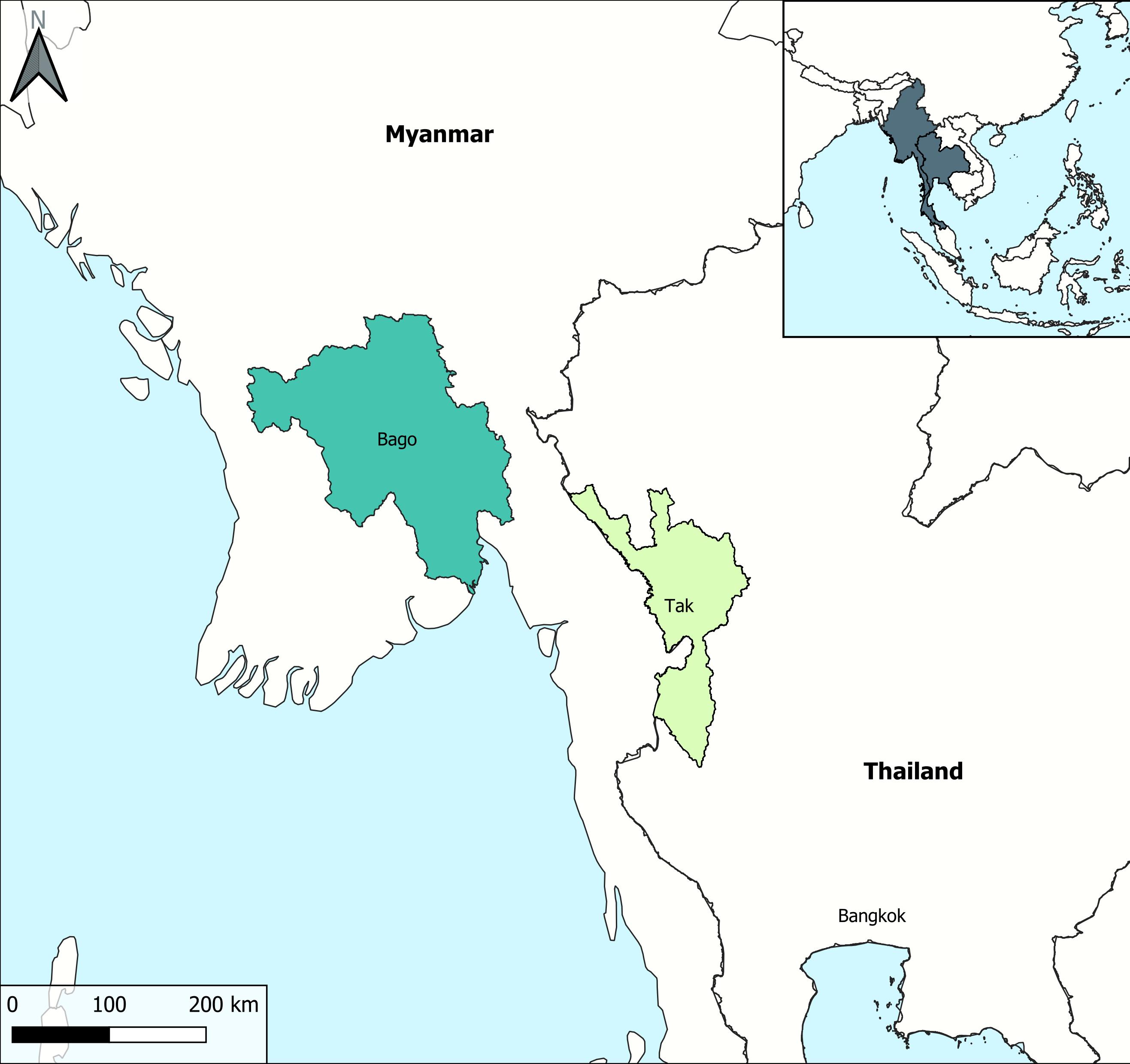
Source: The author’s construct in GIS.
Results and discussion
The major findings of the dissertation were:
- The most common reason for leaving their homes in rural villages in Myanmar, as stated by young migrants interviewed, was their lack of access to land. The vast majority migrated with the aspiration of saving up to return to rural areas and establish farming and non-farming livelihoods, underscoring the importance of viewing labor abroad as a struggle for land.
- Migrants from Myanmar face severe exploitation in Thailand’s agricultural sector. Exploitation is enabled by making sure that the migrants do not obtain legal documents, which capture migrants in exploitative conditions, making it difficult for migrants interviewed to make ends meet and save up for their future.
- Migrant women are disproportionately impacted and face double exploitation in Thailand’s agricultural sector: on the farm and in the home. They commonly earn less than men while also caring for their families and managing the monthly household budget. Such gendered responsibilities are particularly stressful in a context where money often is not enough to ensure the needs and well-being of their families.
- The material challenges young people face in both Myanmar and Thailand cause emotional distress, including feelings of fear, stress, and frustration. At the same time, emotions reveal how young migrants make meaning of and respond to the conditions they face, and help explain why, despite the difficulties, they dream of a rural return.
The findings are presented in more detail below, and more comprehensive analyses are available in associated academic articles (see Mortensen, 2024a; Mortensen, 2024b; Mortensen & Questiaux, 2024; Mortensen, forthcoming).
Young migrants’ labor abroad is a struggle forland in rural areas
The majority of the young migrants interviewed are in Thailand with the intent to enable a return to their villages in Myanmar. Migration is seen as a necessary step to achieve this, as expressed by a young migrant:
”I want to get my own land. If I had stayed in my village, I would not have had the opportunity to get it. That is why I came here to work.”
Their future aspirations are shaped in the villages they came from, and they seek to achieve a higher standard of living through both independent farming and non-farming activities such as shops. For many of the young migrants interviewed, farming is associated with positive emotions, and they actively seek a future on their own farms. One young migrant explains:
“I feel quite happy doing agricultural work. It relates to my livelihood, and I used to work in agriculture when I was young. It relates to my culture and experiences.”
In her photovoice, “The Plant I Want to Grow” (Figure 2), Moe Khine shares her future dream of farming:
“For the future, I have a dream to grow avocado trees near our house. It is my hobby to grow plants.”
Similarly, Bo Aung shares his future agricultural dreams in his photovoice titled “I Want to Gain Skills on Cabbage Cultivation Techniques” (Figure 3):
“The main purpose of taking this photo is that I want to show how Thai farmers cultivate cabbage and plant it systematically by using techniques and tools. In the future, I am going to grow cabbage for commercial and consumption use, using the experience and skills that I have learned from my job. One day, I will apply this knowledge and these skills on my farm if I have the opportunity.”
Figure 2. “The Plant I Want to Grow”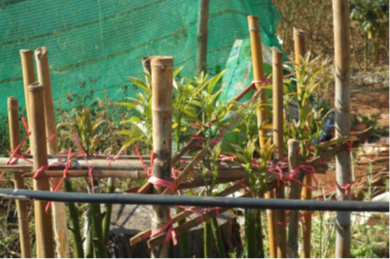
Picture: Photovoice by Moe Khine
Figure 3. “I Want to Gain Skills on Cabbage Cultivation Techniques”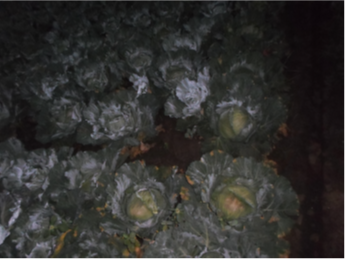
Picture: Photovoice by Bo Aung
Such statements are key to challenging the idea that youth are turning their backs on traditional aspirations for rural livelihoods and instead emphasize the importance of ensuring rural areas that can support rural youth, especially by improving their access to land and other resources. Viewing rural out-migration from a life-course perspective reveals that young migrants leave to enable their eventual return to rural settings (White, 2021; Mortensen, 2024b). Yet, for some, the difficulties of acquiring land and other necessary resources in Myanmar have led them to seek alternatives to farming in rural areas, showing how discursive and material conditions shape both the actual limits of possibility and young people’s perceptions of those limits (Bennike et al., 2020).
Young migrants are captured in exploitation and illegality
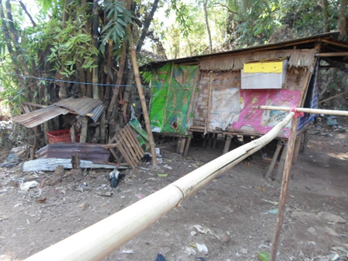
In Thailand’s agricultural sector in Tak Province, the young migrants interviewed live and work under extremely poor and exploitative conditions (Mortensen, 2024a). Their houses are usually constructed from bamboo, old plastic, and chemical bags (see Figure 4). They work for very low wages, and they engage in dangerous work, such as applying chemicals without protective gear or training.
According to the District Agricultural Department, one of the key advantages of agricultural production in Tak Province is the easy access to cheap labor. The price of labor is tightly controlled at regular farmer meetings to ensure everyone pays the same low salary. Daily salaries are most commonly around 160-200 Thai baht for an 8–9-hour workday. Children, who are common in the fields, earn as little as 70–80 Thai baht per day. These salaries are significantly lower than the minimum wage of 315 Thai baht for an 8-hour workday as guaranteed under the 1998 Labor Act (Ministry of Labor 2023). Yet, due to the seasonality of their work, agricultural migrants are regulated under the Ministerial Regulation concerning Labor Protection in Agricultural Work B.E. 2557 (2014), which denies basic rights such as a minimum wage. Consequently, many of the interviewed young migrants end up living from hand to mouth, exactly what they tried to escape in Myanmar, such as Zaw Ko:
“In reality, my life cycle is not really different from that of Myanmar. It is very tough in Thailand, and we get very low salaries.”
In his photovoice “Workplace” (Figure 5), Bo Hthu also explains:
“The job I am doing is hard, tiring, difficult, and stressful. Some people in Myanmar still think that when we work in Thailand, we work under flexible and comfortable conditions. They may not know that we must work under difficult, stressful, and anxious conditions in the agriculture sector to get a bit of money.“
Figure 4. “The Reality of the Community”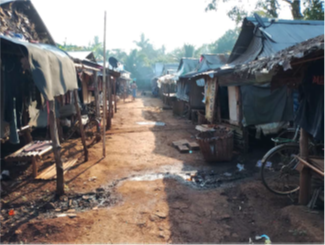
Picture: Photovoice by Maung Zar
Figure 5. “Workplace”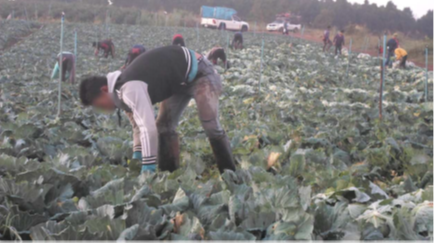
Picture: Photovoice by Bo Hthu
Low wages are also enabled by migrants’ lack of access to legal documentation. Fewer than one in five have documents, most often due to the high costs associated with the process of becoming legal. A migrant told:
“It is really expensive to be legal … There is really a gap between our daily income and the cost of becoming documented.”
Indeed, the notion of cheap migrant labor is in sharp contrast to the high cost of legality (Franck & Anderson, 2019). To control the mobility of migrant laborers, the farmers have a strong interest in preventing the migrants from becoming registered, as passports and work permits enable migrants to move to other places in Thailand where salaries are higher (Campbell, 2018). To do so, they collaborate with the local police force, who have created a system of regulation, which, although enforced with reference to the law, is illegal. The local police sell what migrants call ‘police cards’. Police cards are monthly-purchased, colorful cards the size of a finger, decorated with figures such as fish, cats, and tigers that change each month to signify a new period, costing around half as much as the proper documentation. Consequently, while it is expensive to be legal, it is not cheap to be illegal either. The police cards enable migrants to travel within the local police administrative zone in part of the district without being arrested by the local police, but do not protect them against immigration authorities, who usually raid the villages once per year. By making sure that the migrants are prevented from accessing legal documents and, with that, ensuring their illegal status, they are, in effect, immobilized and prevented from traveling further into Thailand or saving up to return to Myanmar.
At the same time, these migrants are largely unable to challenge the conditions under which they live and work, reflecting their political immobilization. For example, it is difficult for the young migrants to complain due to threats that they will then be reported to the police, and local development organizations explain that illegality makes it difficult to promote labor rights in the agricultural sector.
Young women migrants face double exploitation on the farms and in the home
Living on wages that do not cover basic needs challenges the reproduction of labor, often ensured through women’s unpaid work (Mezzadri et al., 2024). According to Myanmar traditions, women are the main caretakers of the family and household, including managing the monthly household budget. At the same time, women also work in the agricultural fields. Yet, despite working much longer hours when combining productive and reproductive work, migrant women commonly earn 20 THB less per day than men in the farms. A migrant woman explained:
“Women have to work paid jobs and unpaid jobs. For men, they just know that they will work outside and return the money to women. They do not know what we need to buy for the house.”
Ensuring that the family’s needs are met within the monthly budget proves difficult for super-exploited migrants. Many explained that they were forced to take out loans during COVID-19, often from shops and fellow migrant workers, at interest rates as high as 15-20%. Migrant women shared their stress:
“It is easier for men. They just have to work outside and return the money, but not really think about how the money is used. It is a huge responsibility for us.”
“I feel really stressed because I have to manage income and expenditures. The income is not enough, and I have to borrow money. My husband does not know about this, and I feel really stressed when I manage it alone.”
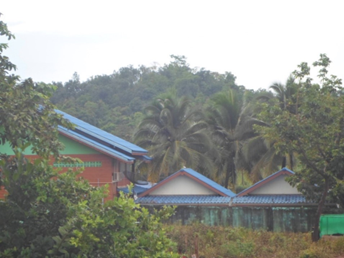
The difficulties of making ends meet especially affect women’s ability to care for their children and support their children’s education. In photovoices, Htet Soe (Figure 6) and May Thazin (Figure 7) express their emotional experiences:
“This is the life of migrants. We are living in poor conditions, but I feel that I do not want my children to live like that.”
“The main purpose of taking this photo is to show my future dream and aspiration. This home [a Thai home] seems to provide family security. I want to see my family members staying in a secure space in the future, even though we have to live under insecure conditions at the moment.”
Figure 6. “Life of migrant workers”
Picture: Photovoice by Htet Soe
Figure 7. “A home that provides family members with warmth and security”
Picture: Photovoice by May Thazin
Before they start working, children normally attend so-called Migrant Learning Centers. The Myanmar schoolteachers running the centers explained that once children reach working age, some parents are forced to let their children join them on the farms to meet their family expenses and save up to return to Myanmar. As this shows, migration and exploitation are gendered processes, as the interviewed migrant women face double struggles due to being squeezed in both the productive and reproductive spheres (Mortensen et al., forthcoming).
Emotions shape and are shaped by experiences of migration and exploitation
Experiences of migration and exploitation not only come with material consequences for the young migrants but also with emotional impacts (Ahmed, 2004; Bondi et al., 2005). Living without documentation in a context where ends do not meet causes fear of deportation, stress, and frustration, and challenges notions of youth. As two young migrants expressed:
“I do not consider myself young. Youth is freedom, but in Thailand, we just wake up go to work and come back and sleep.”
“I have to spend my young life in Thailand, and honestly, I do not have any youth experiences or freedom. We cannot express ourselves and cannot spend our youth life freely because it is not our country, and we have to stay very quiet.”
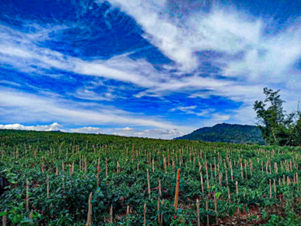
Importantly, working towards achieving their future aspirations has very real emotional impacts in the here and now. Yet, the young migrants interviewed are not mere victims of their conditions. While they do not engage in any visible or organized forms of resistance, emotional accounts reveal how they make meaning of the conditions they live and work under, sometimes carrying political messages (Mortensen & Questiaux, 2024). In a photovoice titled “This photo is beautiful, but behind this photo, there are so many difficult stories,” Pyae Ko (Figure 8) shares his thoughts:
“This photo has two purposes. The first is to show pure beauty. The other is to show the workplace. It is a chili plantation where I spray fertilizer and collect the chili. Sometimes it touches my eyes and skin, and it itches a lot. If people do not know about this place, they may think it is really nice, but they do not know what is beyond.”
Figure 8. “This photo is beautiful, but behind this photo, there are so many difficult stories”
Picture: Photovoice by Pyae Ko
In another photovoice, Bo Hthu (Figure 9) similarly wants to let people know about their conditions:
“By looking at this photo, you can see how hard we work and how tired we are… Some days we need to collect cabbage and prepare seven cars in only one morn¬ing. It makes us too tired and frustrated… I want other people to know how we are working for our survival.”
Figure 9. “Tiring work”
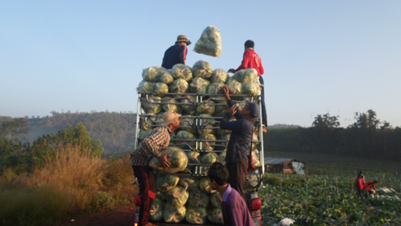
Picture: Photovoice by Bo Hhtu
Emotions also play an important role in understanding young migrants’ dream of a rural return. A young migrant recounts:
“I was happy in Myanmar when I lived with my family and spent time with my friends, and I want to return to the village.”
Emotional ties to rural areas on the one hand, and emotional difficulties as migrant workers on the other, are thus important in explaining why young people, despite difficulties, dream of a rural return. Emotions, in that sense, have potentially material consequences, as young people might one day return to rural areas with capital and new skills, which could develop Myanmar’s rural areas in new directions, meet the desires of young people, and, in so doing, make rural life more attractive.
Conclusion
The findings in the dissertation highlight the profound injustices and unreasonable challenges that many rural youths in the Global South face in achieving very modest aspirations for a better life. Inequality and lack of access to land in Myanmar’s rural areas make it difficult for young people to transition to adulthood and start an independent life, and many migrate to Thailand with the hope of saving up to return home. The young migrants in Thailand’s agricultural sector, however, work under exploitative conditions, enabled by a lack of access to documents and illegalization, which control and immobilize migrants’ socio-economically, spatially, and politically with serious emotional consequences.
The findings stress the importance of including youth in development projects and policy making to understand their dreams and aspirations from their own perspective. Indeed, contrary to what is often believed, some rural youth, even if they leave their rural areas of origin, envision their future in rural areas, and some also in agriculture. The issue, as such, lies not in adjusting rural youth aspirations but rather in ensuring access to land and other resources. Furthermore, their reliance on migration to achieve their life aspirations, especially in Myanmar’s current political context, underscores the importance of ensuring fair and secure working and living conditions while working abroad. Currently, migrant workers are largely unrecognized in Thailand’s agricultural sector. Yet, there is much scope for both development actors and policymakers in addressing the severe forms of exploitation and illegalization that migrant workers in this sector are forced to work under.
While Sweden, like many other aid actors, is phasing out their development cooperation with Myanmar following the military coup, and in Southeast Asia more broadly, the findings in this dissertation highlight the grave impacts this will have for Myanmar’s youth as they struggle for justice. As an established leader in rights-based approaches, including labor and migration rights and gender equality, Sweden is well-positioned to do this work.
Policy Recommendations
- Include youth from Myanmar’s rural areas in program and policy making: Development actors should include differentiated rural youth voices to understand youth aspirations and needed support.
- Invest in youth access to land and other resources in rural Myanmar: Development actors should engage in work to foster rural areas that can encompass rural youth who want to stay without migration. Special attention should be given to gender inequalities in access to resources.
- Support youth resistance and transition to democracy in Myanmar: Youth migrants in Thailand are not only aspiring for a better future for themselves and their families, but for their country, and development actors should support them in their fight against the military dictatorship.
- Recognize the dependency on migrant workers in Thailand’s agricultural sector, including issues of gender inequality and child labor, and ensure protection under the 1998 Labor Act: Despite migrant workers – including children – being permanently involved in the agricultural sector, they are often unrecognized and regarded as seasonal, excluding them from protection under the 1998 Labor Act. Development actors should focus on addressing such issues to ensure labor rights and address child labor.
- Initiate advocacy campaigns on the conditions of undocumented migrant workers in Thailand’s agricultural sector: Development actors should replicate advocacy campaigns in the fisheries and factories sectors in Thailand, which have successfully improved labor rights and access to documentation in these sectors.
- Ensure agricultural migrant workers’ access to information around documentation and labor rights in Thailand: Development actors should replicate work with nearby factory workers, which has increased access to documentation, as migrant workers in Thailand’s agricultural sector lack access to information about their rights and access to documentation.
References
Ahmed, S. (2004). The Cultural Politics of Emotion. New York: Routledge.
Bastia, T. and Skeldon, R. (2020). “Introduction.” In Bastia, T. and Skeldon, R., Routledge Handbook of Migration and Development, New York: Routledge: Routledge.
Bello, W. (2018). “Paradigm Trap The Development Establishment’s Embrace of Myanmar and How to Break Loose.” Yangon/Amsterdam: Transnational Institute (TNI), Paung Ku and Dawei Development Association (DDA).
Bennike, R. B., Rasmussen, M.B. and Nielsen, K.B. (2020). Agrarian Crossroads: Rural Aspirations and Capitalist Transformation. Canadian Journal of Development Studies / Revue Canadienne d’études Du Développement 41, pp. 40–56.
Boccagni, P. and Baldassar, B. (2015). Emotions on the Move: Mapping the Emergent Field of Emotion and Migration. Emotion, Space and Society 16, pp. 73–80.
Bondi, L., Davidson, J. and Smith, M. (eds). (2005). Emotional Geographies. London: Routledge
Campbell, S. (2018). “Border Capitalism, Disrupted: Precarity and Struggle in a Southeast Asian Industrial Zone”. Ithaca, NY: Cornell University Press.
Cooper A., Swartz, S. and Ramphalile, M. (2021). “Youth of the Global South and why they are worth studying”. In Swartz, S., Cooper, A., Batan, C.M. and Kropff Causa, L. (eds). The Oxford Handbook of Global South Youth Studies. Oxford: Oxford University Press
Food and Agriculture Organization. (2017). The Future of Food and Agriculture: Trends and Challenges. Food and Agriculture Organization of the United Nations (FAO) https://www.fao.org/policy-support/tools-and-publications/resources-details/en/c/472484/ (last accessed 11 September 2024)
Faxon, H.O. (2020). Securing Meaningful Life: Women’s Work and Land Rights in Rural Myanmar. Journal of Rural Studies 76, pp. 76–84.
Franck, A.K. and Anderson, J.T. (2019). The Cost of Legality: Navigating Labour Mobility and Exploitation in Malaysia. IQAS 50, pp. 19–38.
Harkins, B. (ed). (2019). Thailand Migration Report 2019. United Nations Thematic Working Group on Migration in Thailand, International Organization for Migration https://thailand.un.org/en/50831-thailand-migration-report-2019 [11 Sep 2024]
International Fund for Agricultural Development. (2019). 2019 Rural Development Report: Creating Opportunities for Rural Youth. International Fund for Agricultural Development (IFAD) https://www.ifad.org/ruraldevelopmentreport/ [11 Sep 2024]
International Labour Organization. 2022. Working and Employment Conditions in the Agriculture Sector in Thailand: A Survey of Migrants Working on Thai Sugarcane, Rubber, Oil Palm and Maize Farms. Thailand: International Labour Organization (ILO).
King, R., Lulle, A. and Melossi, E. (2021). New Perspectives on the Agriculture–Migration Nexus. Journal of Rural Studies 85, pp. 52–58.
Mekong Migration Network. (2020). Migrant Agricultural Workers in Thailand. Chiang Mai: MMN.
Mezzadri, A., Stevano, S., Ossome, L. and Bargawi, H. (2024). The Social Reproduction of Agrarian Change: Feminist Political Economy and Rural Transformations in the Global South. An Introduction. Journal of Agrarian Change, 24(3), e12595.
Ministry of Labor. (2023). Minimum Wage. 2023. mol.go.th/en/minimum-wage. [11 Sep 2024]
Mortensen, S. (2024a). Rightless rurality: The illegalization of Myanmar migrant laborers in Thailand’s agro-industry. Journal of Peasant Studies 51(7), pp. 1508-1529.
Mortensen, S. (2024b). Labour Abroad as a Struggle for Land: Young Migrants’ Dream of a Rural Return to Myanmar. Antipode, 57(6), pp. 2168-2189.
Mortensen, S., Lin, A.H. and Questiaux, F. (forthcoming). Double Struggle: Double struggle: Locating gendered relations of (re)production and agency among super-exploited Myanmar migrant laborers in the Thai agro-industry. Feminist Economics.
Mortensen, S. and Questiaux, F. (2024). Extending the ethnographic toolbox: Photovoice and everyday experiences of marginalized groups. Gender, Place & Culture, 32(3), pp. 287-312
Munck, R. (2013). The precariat: A view from the South. Third World Quarterly, 34(5), pp. 747–762
Munck, R. (2017). “Globalisation, labour, and the “precariat”: Old wine in new bottles?”. In Jørgensen, M.B. and Schierup, C.U. (eds) Politics of Precarity: Migrant Conditions, Struggles, and Experiences. Leiden: Brill
Park, C. M. Y. (2021). Gender and generation in rural politics in Myanmar: A missed space for (re)negotiation? Journal of Peasant Studies, 48(3), pp. 560–585.
Schewel, K. (2015). Understanding the Aspiration to Stay. Working Paper. Oxford: International Migration Institute (IMI), Oxford Department of International Development (QEH), University of Oxford.
Shattuck, A., Grajales, J., Jacobs, R., Sauer, S., Galvin, S. S. and Hall, R. (2023). Life on the land: New lives for agrarian questions. Journal of Peasant Studies, 50(2), pp. 490–518.
Ra, D., Kham, S.S., Barbesgaard, M., Franco, J.C. and Vervest, P. (2021). The Politics of Myanmar’s Agrarian Transformation. The Journal of Peasant Studies 48(3), pp. 463–75.
Rigg, J., Salamanca, A. and Thompson, E. (2016). The Puzzle of East and Southeast Asia’s Persistent Smallholder. Journal of Rural Studies 43, pp. 118–133.
Timmer, C. P. (1988). The Agriculture Transformation. Handbook of Development Economics. Elsevier Science Publishers.
Timmer, C. P. (2009). Managing Structural Transformation: A Political Economy Approach. WIDER Annual Lecture 16. Helsinki: UNU-WIDER.
White, B. (2021) Human capital theory and the defectology of aspirations in policy research on rural youth. European Journal of Development Research 33(1), pp. 54–70
World Bank. (2008). Agriculture for Development. World Bank Development Report. Washington: World Bank.
World Bank. (2023). Migrants, Refugees, and Societies. World Bank Development Report. Washington: World Bank.
Wyn, J. (2015). ”Thinking About Children and Youth.” In Wyn, J. and Cahill, H. Handbook of Children and Youth Studies. Singapore: Springer Singapore.
Development Dissertation Brief, 2026:06
to
The Expert Group for Aid Studies (EBA)
The Expert Group for Aid Studies – EBA – is a Government committee analysing and evaluating Swedish international development aid. This report can be downloaded free of charge at www.eba.se
Please refer to the present paper as: Sofie Mortensen (2026), Aspiring to a Rural Return: Understanding Myanmar Youth’s Emotional Experiences of Migration and Exploitation in Thailand’s Agricultural Sector, Development Dissertation Brief 2026:06. The Expert Group for Aid Studies (EBA), Sweden.