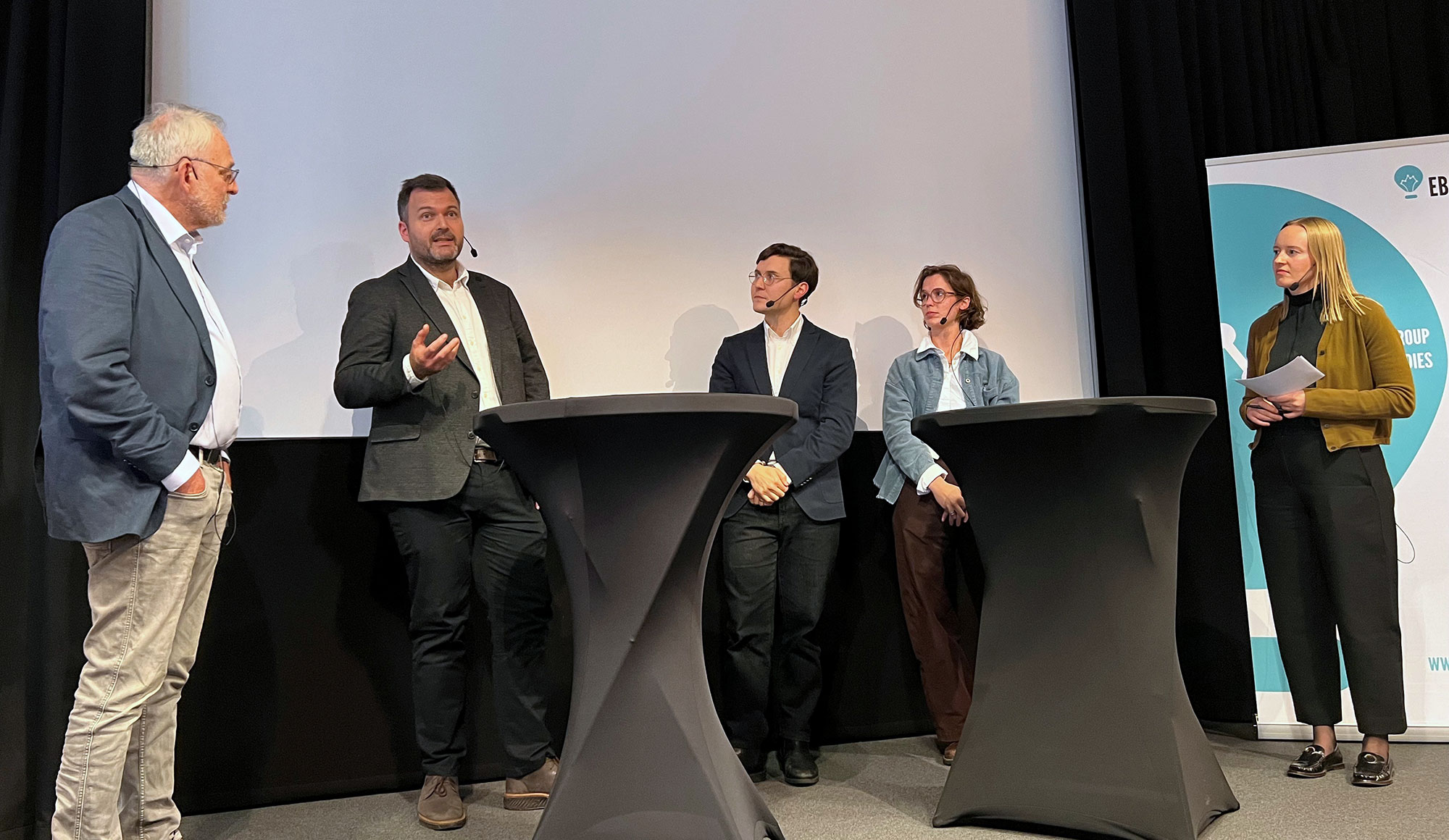
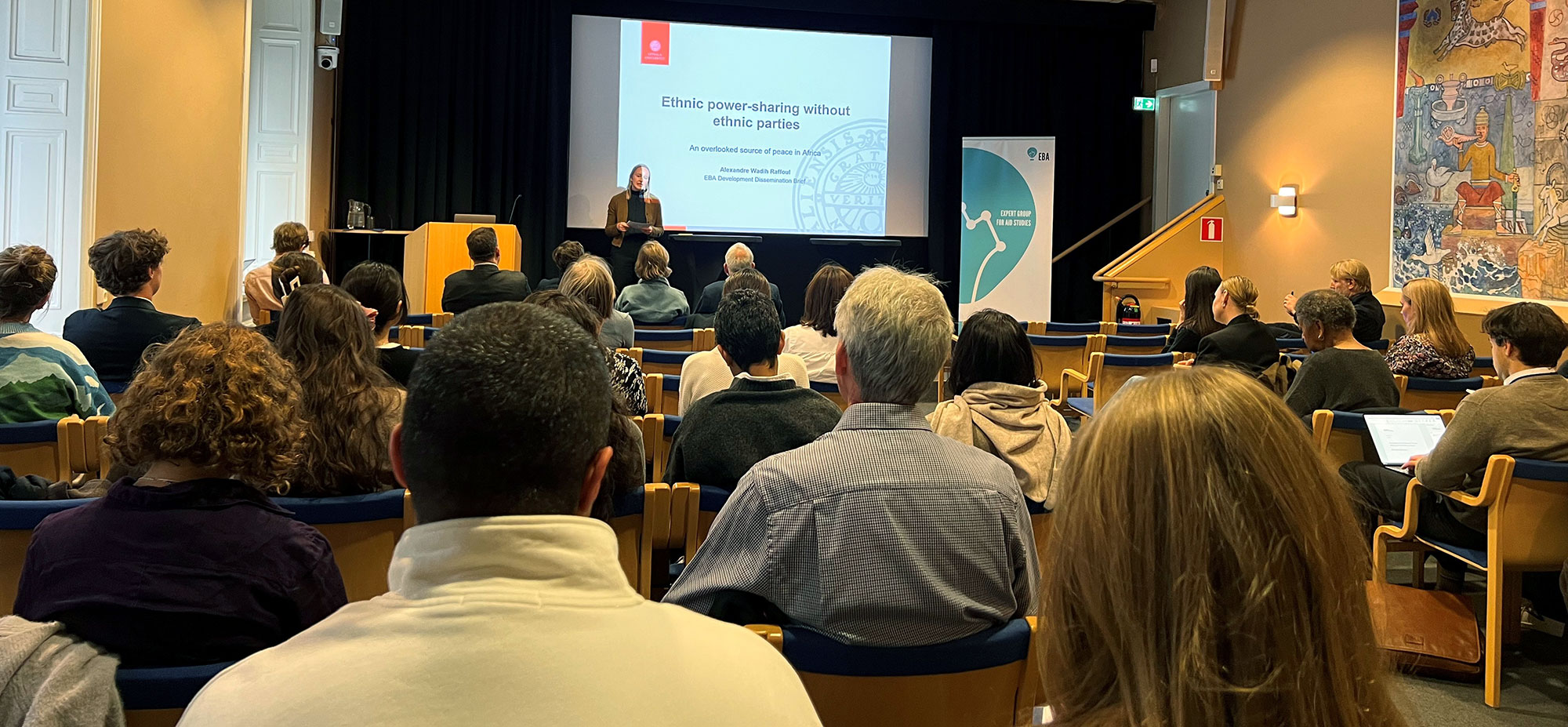
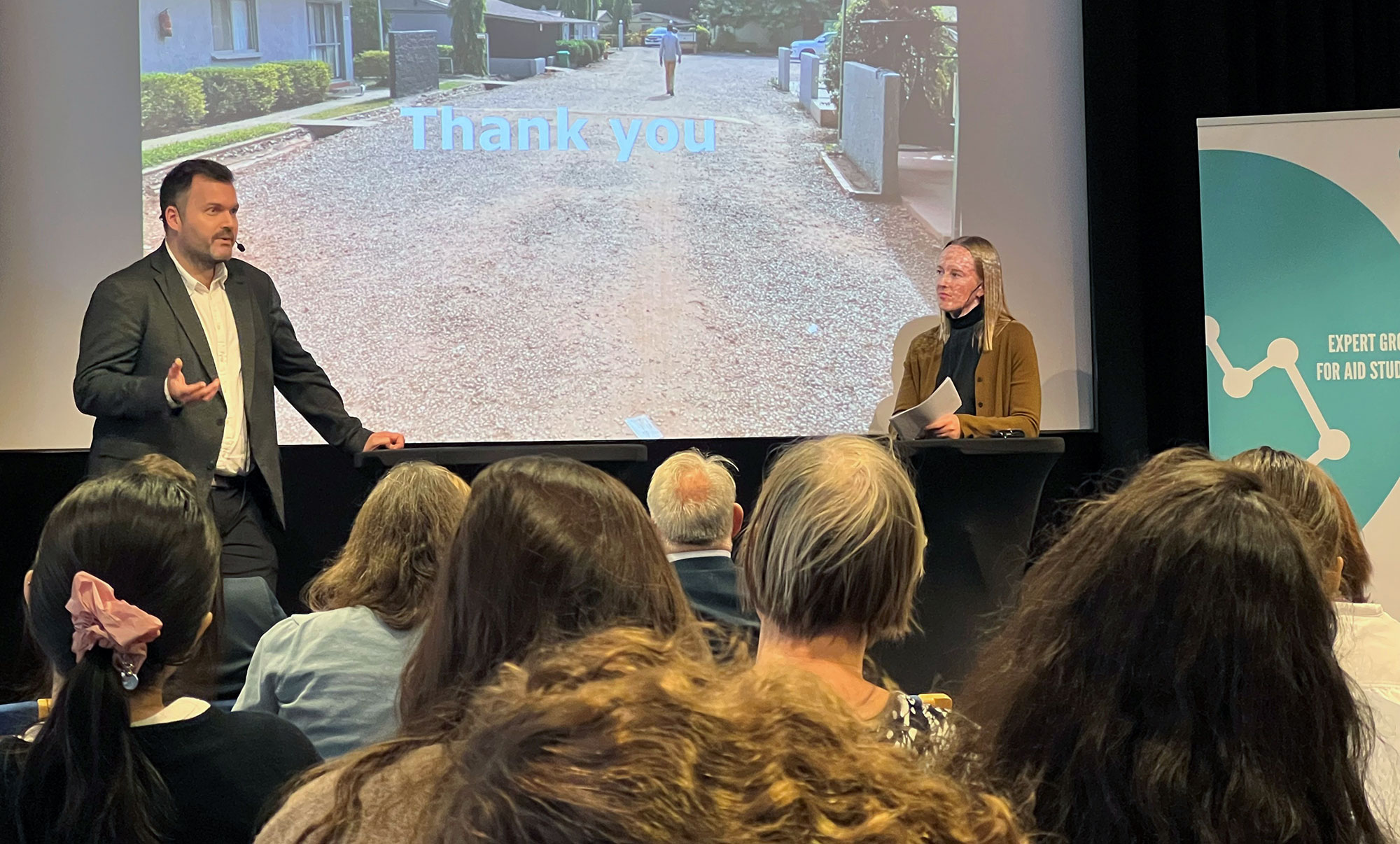
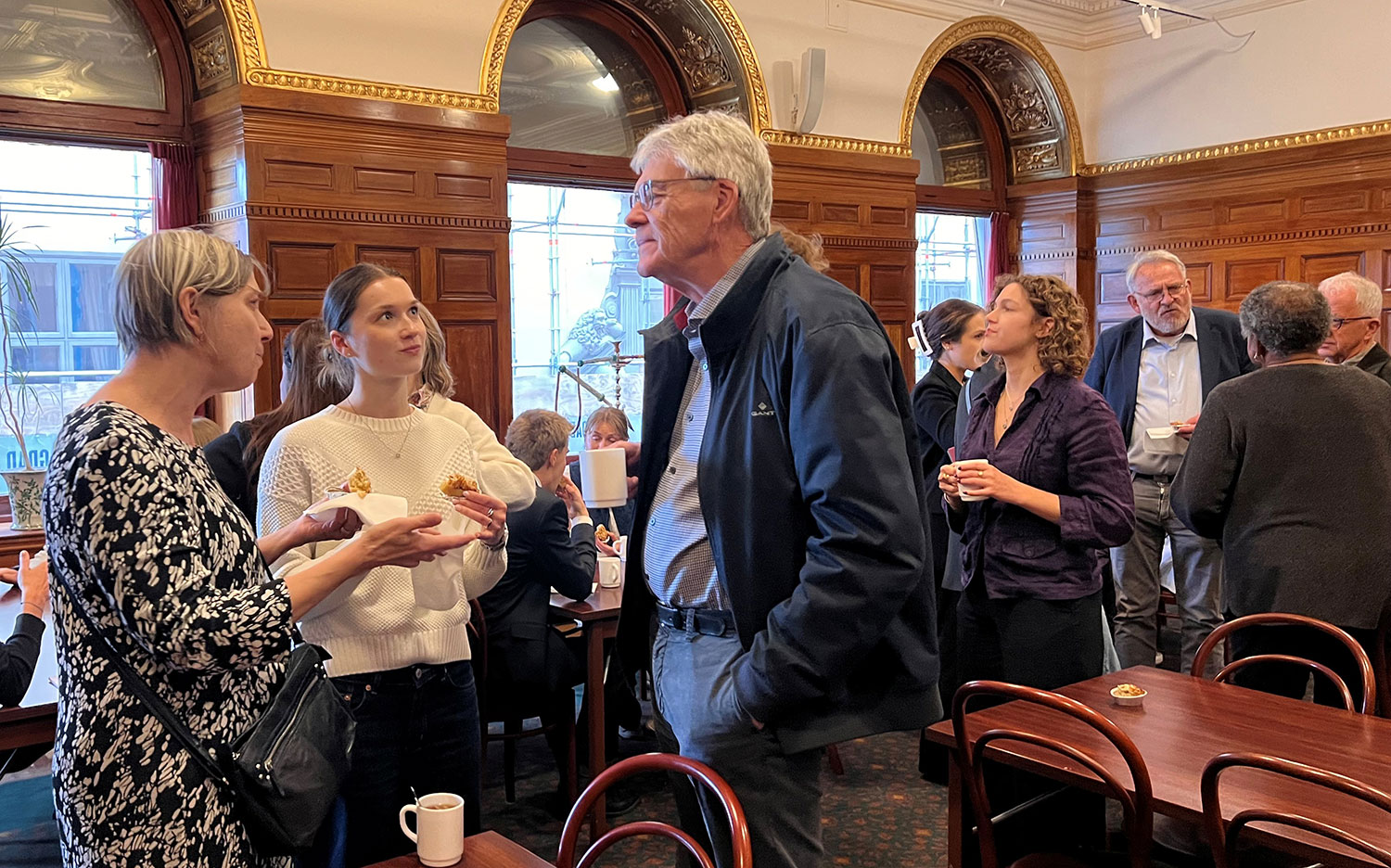
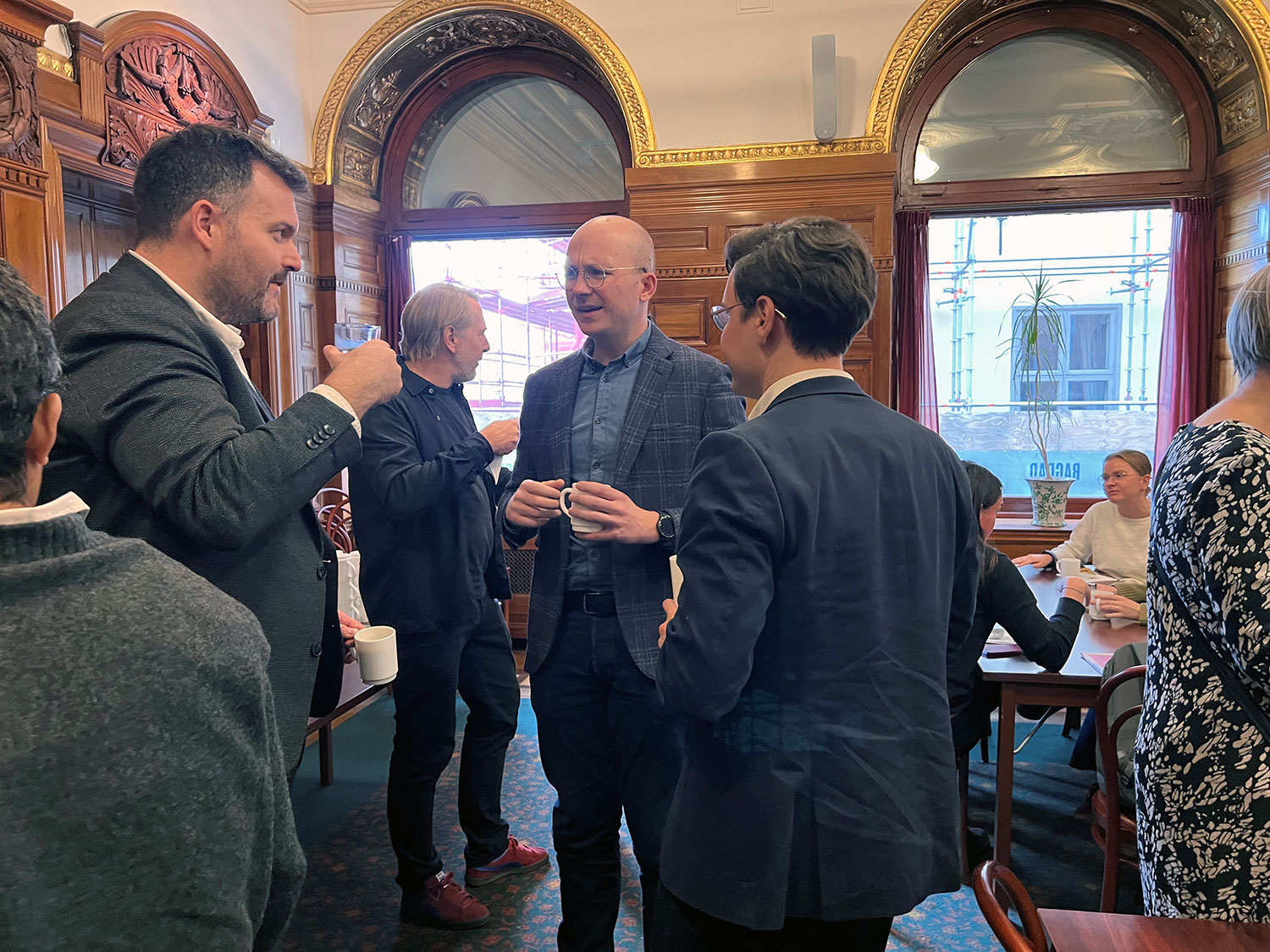
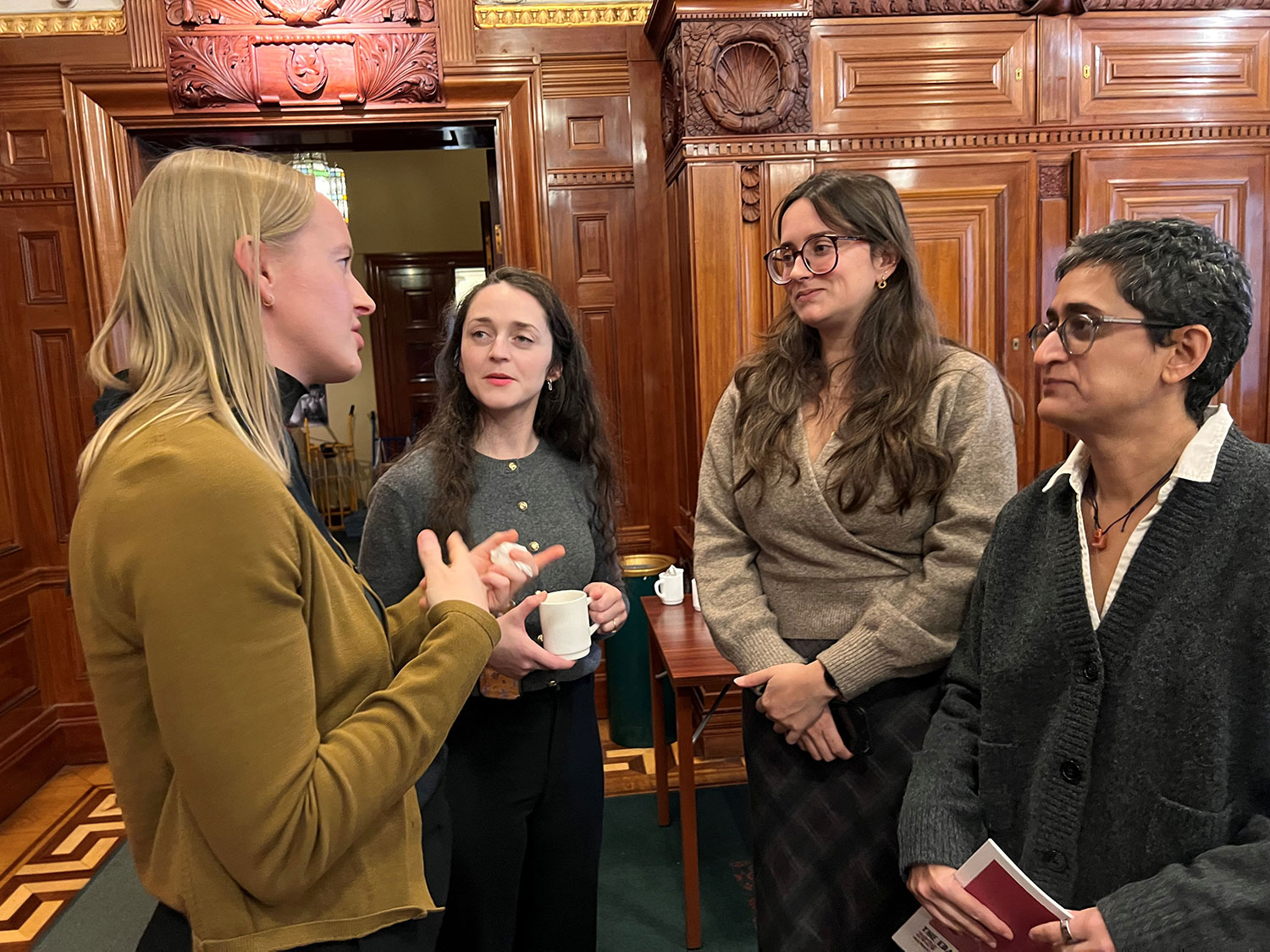
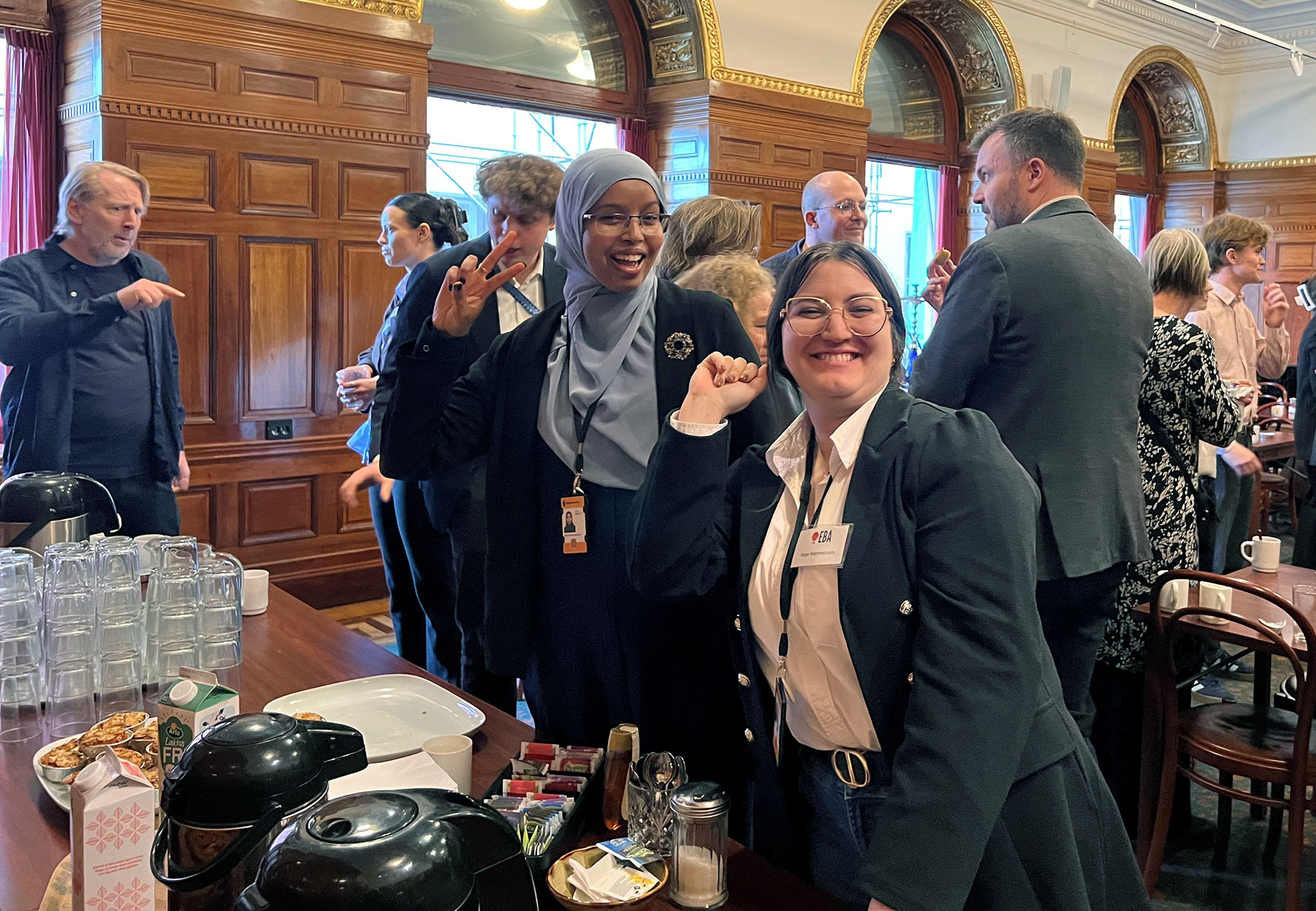
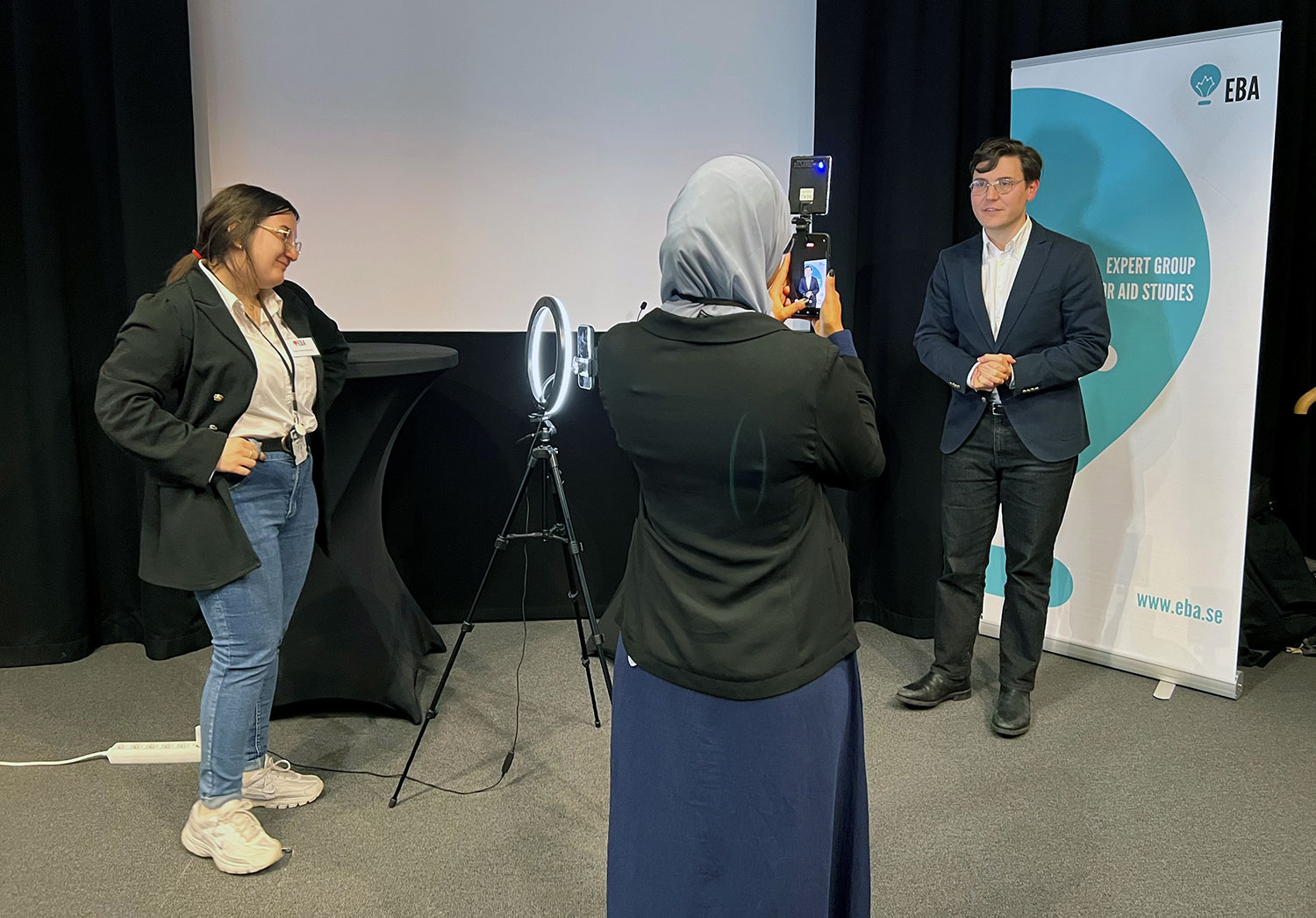
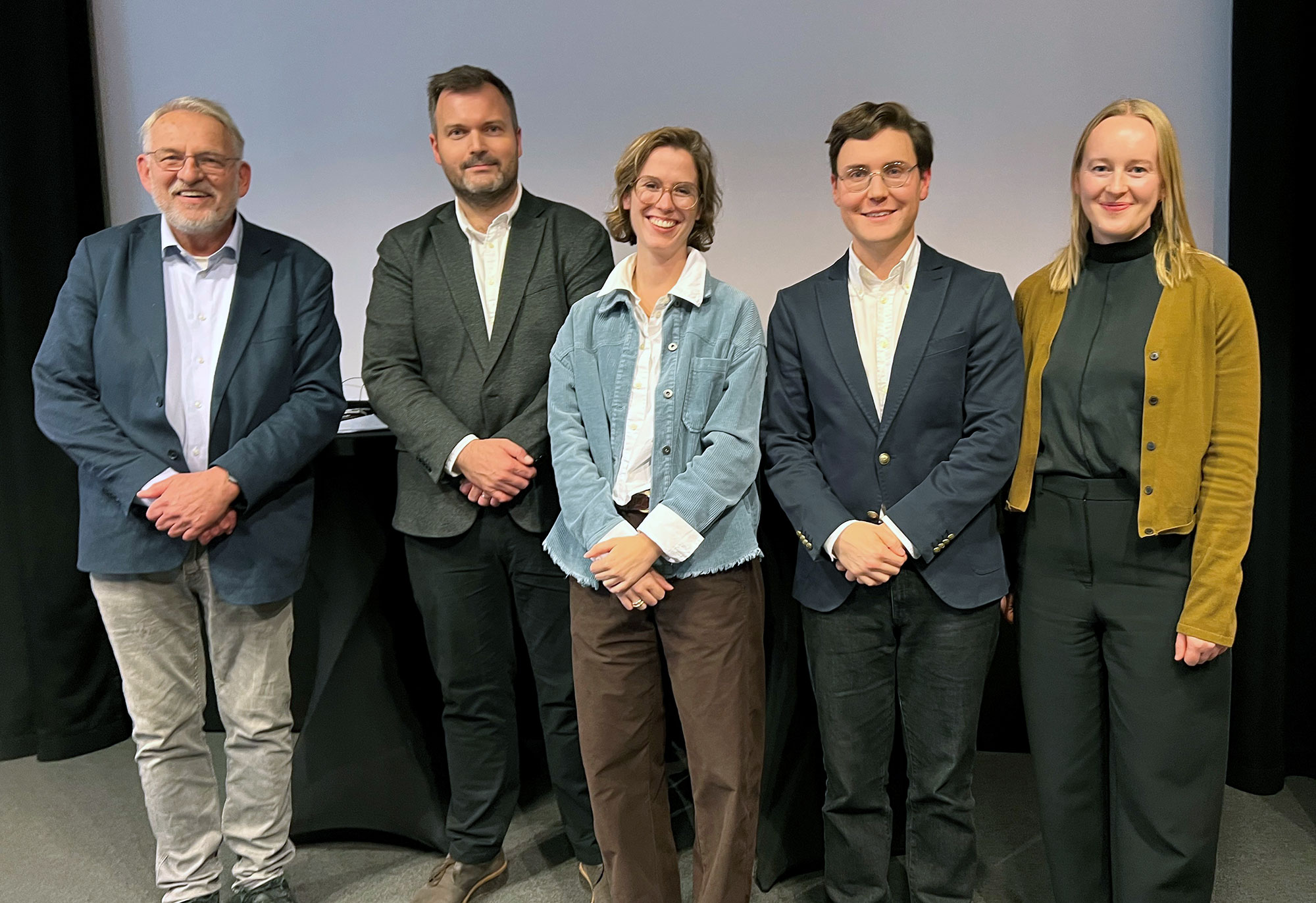
An EBA seminar on current challenges in conflict-affected and post-conflict societies. Drawing on three Development Dissertation Briefs (DDB)*, the seminar explored conflict-related mobility, ethnic power-sharing, and the role of international law in peace processes, and what research can tell us about how development cooperation can be designed to support peace and stability.
The seminar highlighted how political violence shapes displacement and mobility in contexts such as Somalia and Bangladesh, how multi-ethnic power-sharing arrangements manage ethnic conflict in countries such as Burundi and Mauritius, and how international law affects participation in peace and constitutional reform processes, illustrated through the case of South Sudan. Together, the presentations offer new perspectives on complex societal problems and policy challenges in conflict-affected and post-conflict societies.
Maxine Leis presented her paper, “DDB Signals of Violence, Patterns of Flight: Predicting and Explaining Conflict-Related Mobility,” and discussed how the impact of political violence as a driving force behind human mobility varies across different contexts, forms of violence, and types of movement. Mobility responses depend on overlapping stresses and the resources available to households.
William Underwood provided insights into how governments and partner organizations can use international law to promote inclusive peace and post-conflict constitutional reform processes, drawing from his DDB Using International Law to Promote Inclusive Peace and Post-Conflict Constitutional Reform: Insights from South Sudan
Alexandre Raffoul presented his DDB, Ethnic Power-Sharing without Ethnic Parties: An Overlooked Source of Peace in Africa, which recommends that associative power-sharing be considered when drafting peace agreements and constitutions in divided societies, but also that it be accompanied by targeted support for internal party democracy and civil society organizations representing minorities.
Peter Weiderud, an advisor at the Unit for UN Policy, Conflict Issues, and Migration at the Ministry for Foreign Affairs, offered comments and reflections based on his extensive experience. This was followed by a panel discussion on the research and its potential implications for policy and practice, moderated by Linn Ternsjö, Expert Group for Aid Studies (EBA).
*What is a DDB?
A Development Dissertation Brief (DDB) is a publication format at EBA in which the purpose is to communicate recent doctoral dissertations in a concise and accessible format to policymakers, practitioners, and other stakeholders in the field of development.