


When humanitarian aid decreases, refugees need to find ways to support themselves. At the same time, they face resistance in the form of international and national systems. What can and must be done? What is the role of aid, and how are development aid and humanitarian aid connected?
These questions were discussed by Jacob Wernerman (Sida), Eva Grambye (Danish Refugee Council), Annika Sandlund (UNHCR), Måns Fellesson (REMESO, Linköping University), Mats Hårsmar (EBA) and Jan Pettersson (EBA) at the EBA seminar.
The global number of forced displaced people is record high – over 120 million. Many of them are refugees who end up in camps in neighbouring countries for years or even decades.
Based on a global agreement from 2018 governments, donors and humanitarian organisations promote the integration of refugees into host country economies, aiming at their self-reliance and decreased dependence on rapidly dwindling humanitarian support.
A new EBA report evaluates the effectiveness of such programs and interventions, with cases from refugee settlements in Uganda and Kenya.
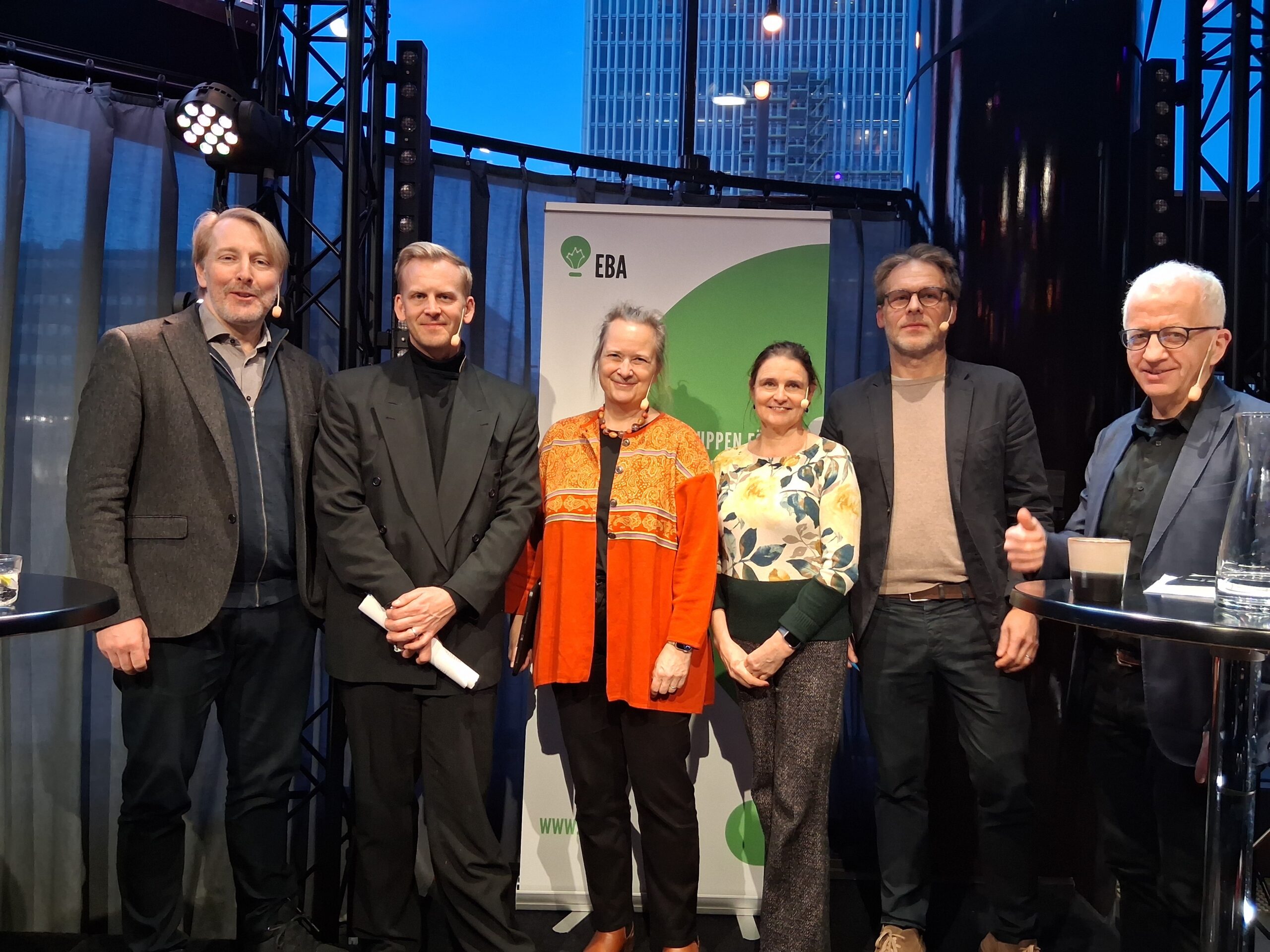
Jan Pettersson, EBA, Jacob Wernerman, Sida, Eva Grambye, Danish Refugee Council, Annika Sandlund, UNHCR , Måns Fellesson, REMESO, Linköping University och Mats Hårsmar, EBA.