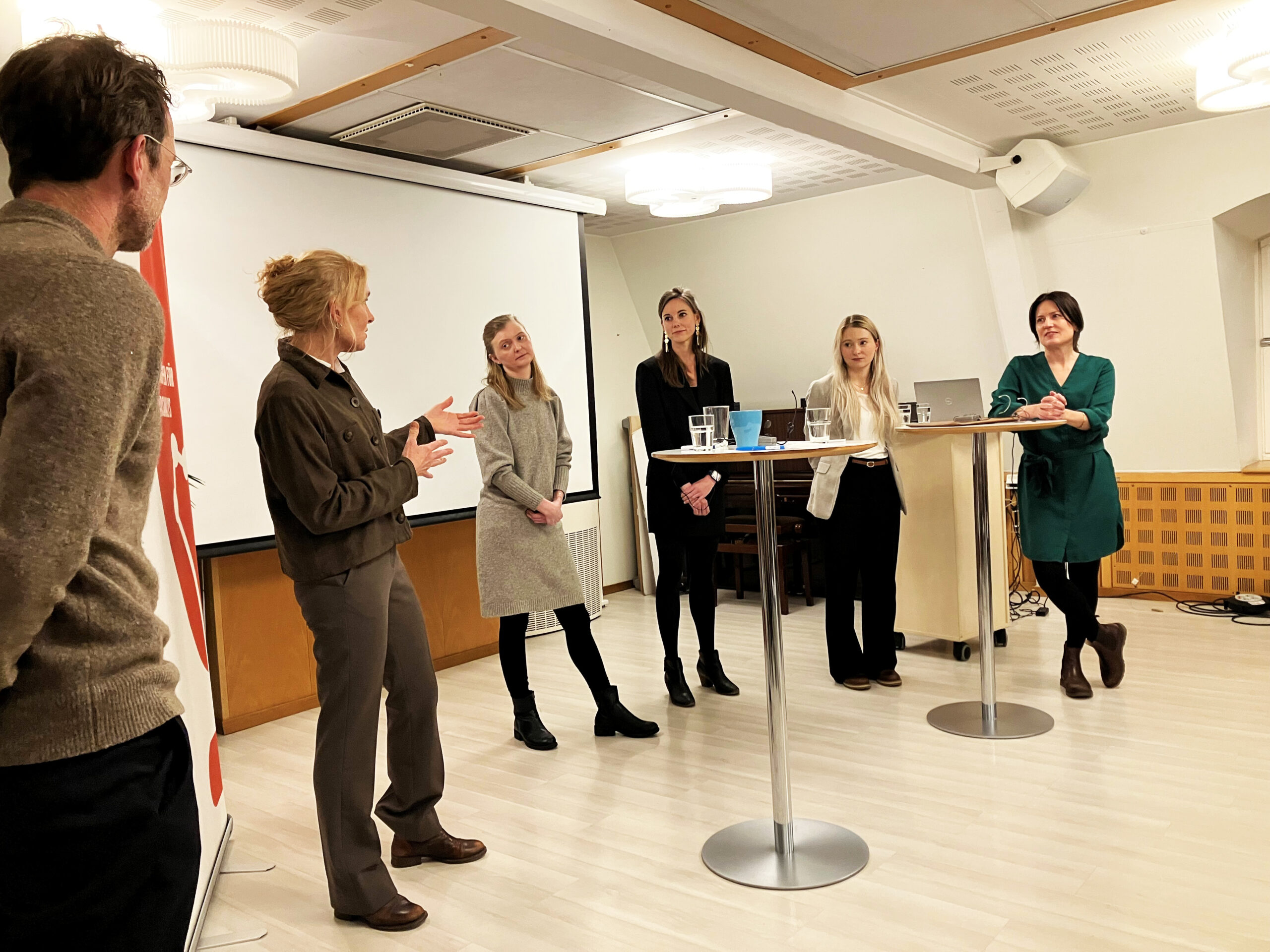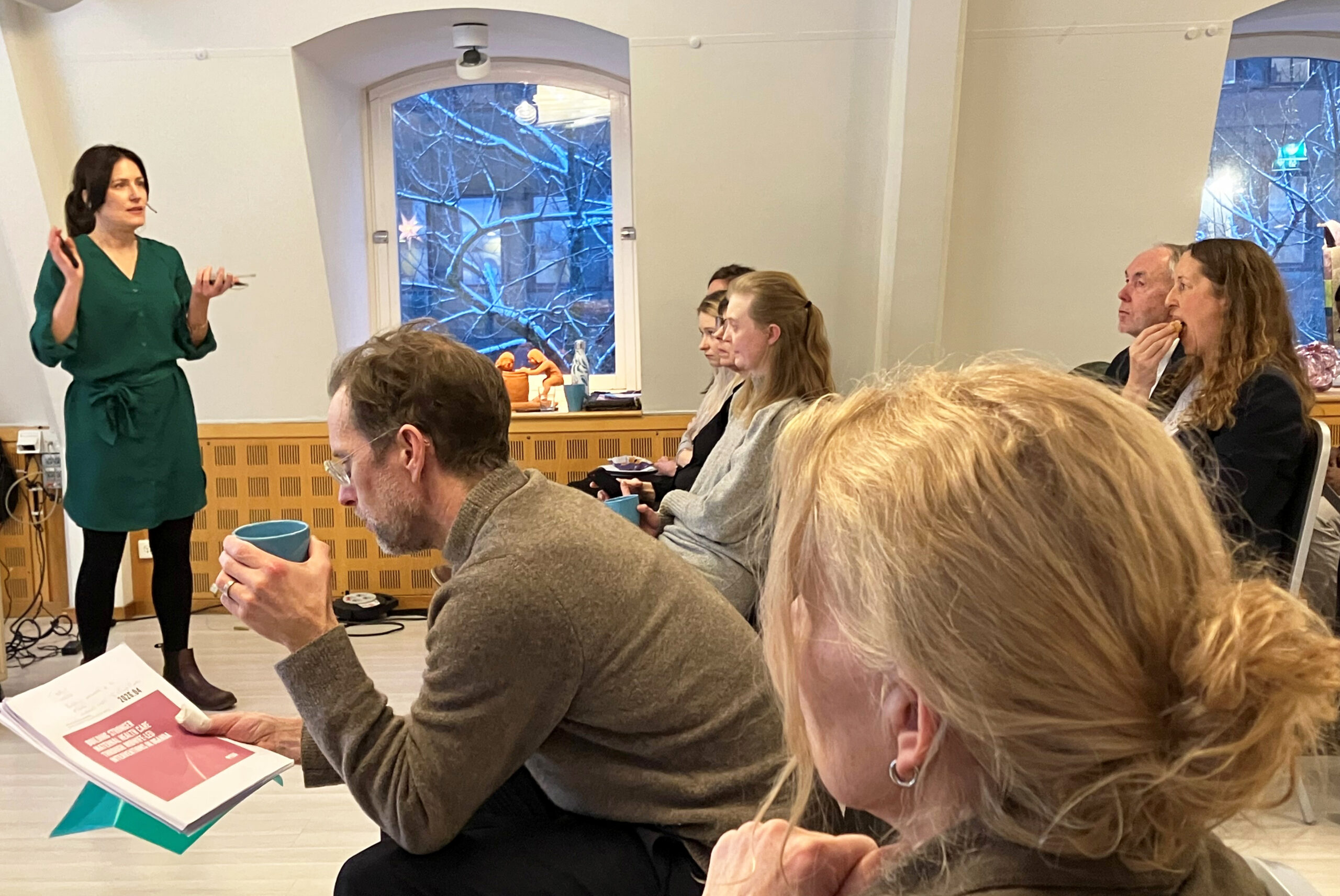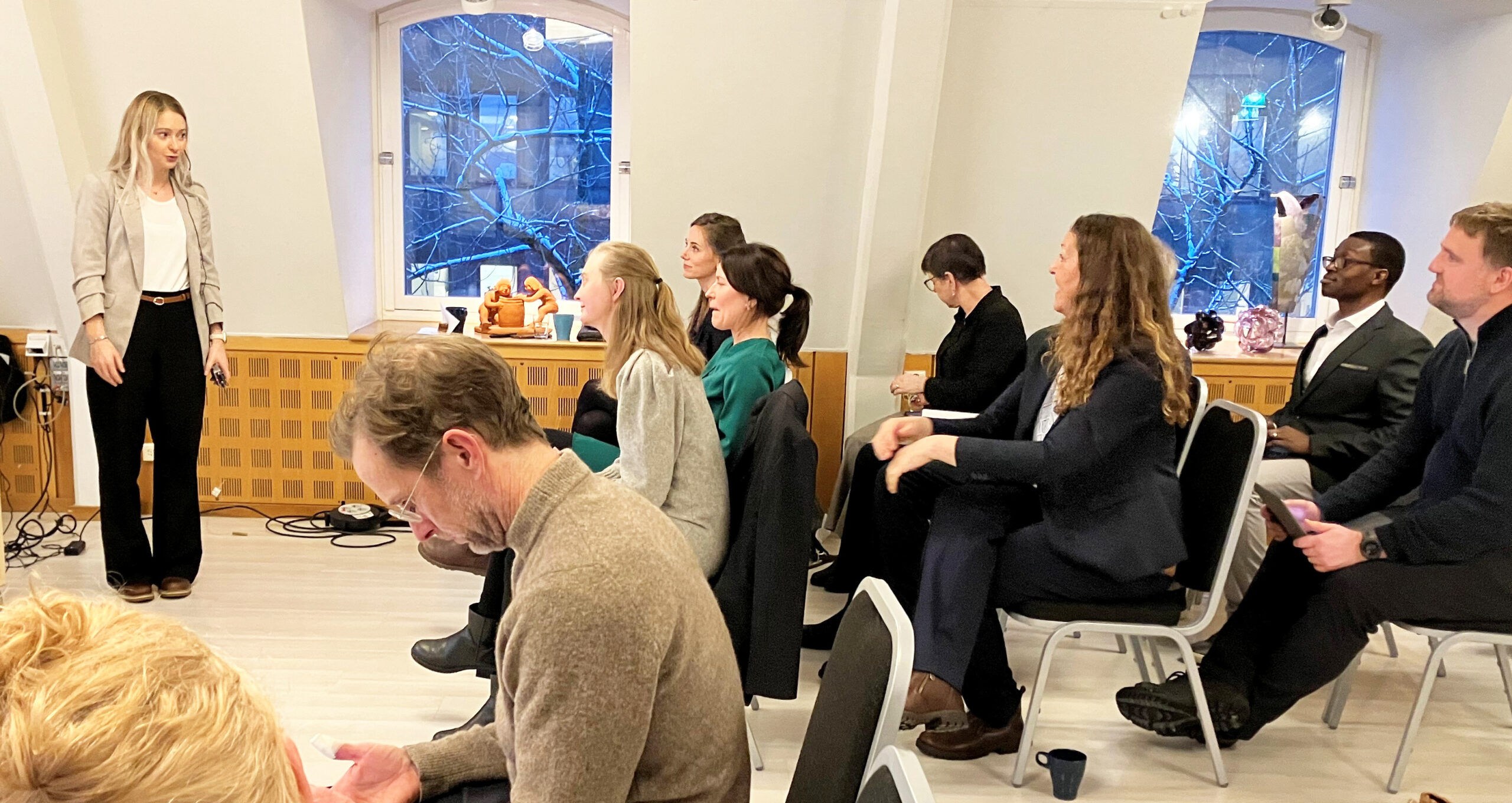


The EBA seminar presented new research focusing on some of today’s global health challenges. The seminar, which was based on a total of five dissertations, explored the potential of solid research to inform aid policy, strengthen health systems, and contribute to the development of more equitable and effective policy. Jesper Sundevall, head of the research unit at Sida, emphasised that researchers must familiarise themselves with the needs of decision-makers and implementers, and adapt their communication of research accordingly.
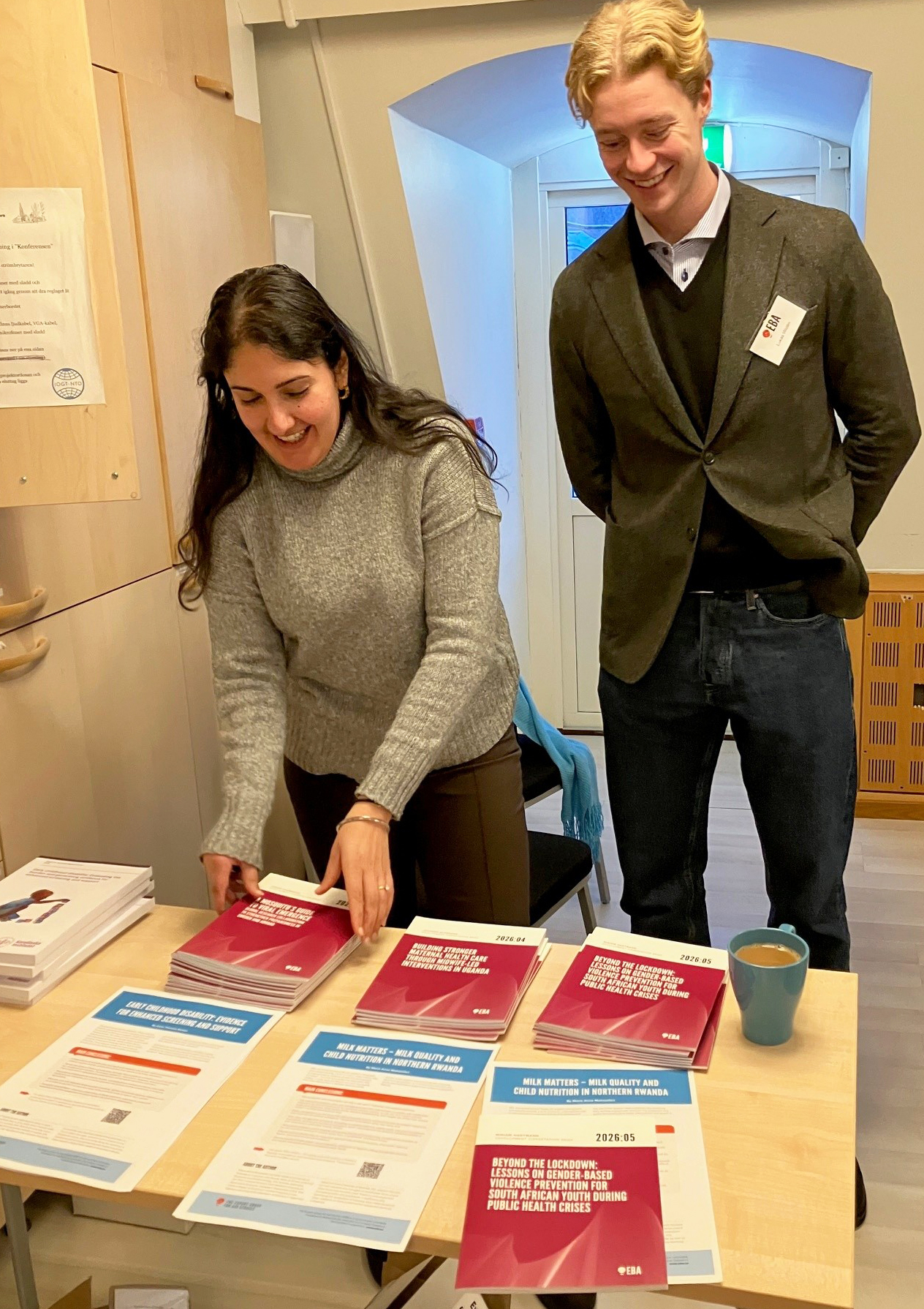
Anna-Theresia Ekman, PhD, Karolinska Institutet talked about how many children live with some type of disability. The disabilities vary in type and severity, and to what extent children will be affected by them depend largely on factors in the surrounding society. If supported, negative consequences of disability can be mitigated, strengthening children’s development, positively impact families’ economies, and empower communities. Read Early childhood disability: Evidence for enhanced screening and support.
Anne Mukasafari, PhD, Sveriges Landbruksuniversitet (SLU) showed how better animal husbandry and access to milk and other animal based foods can contribute to a reduction of the incidence of stunting in children. This thesis is based on research from Rwanda and examines the links between various factors that affect stunting in children, such as animal feed, milking, consumption of milk and eggs, and socioeconomic household variables Read Milk matters – milk quality and child nutrition in Northern Rwanda.
Janina Krambrich, PhD, Uppsala Universitet talked about how mosquitoes transmit viruses such as Japanese encephalitis and chikungunya. Through field studies in Vietnam and lab tests in Sweden, this DDB examines global virus spread and the potential for mosquito-borne transmission in Sweden. The findings highlight how climate, ecology, and globalization shape infection risks and underscore the need for global collaboration, capacity building, and integrated preparedness for emerging health threats. Read A mosquito’s guide to viral emergence: Global research collaboration to strengthen preparedness in Sweden and abroad.
Johanna Blomgren, PhD, Karolinska Institutet showed how evidence-based midwifery practices like dynamic birth positions and perineal protection can significantly improve the quality of care and health outcomes for mothers and newborns. Her dissertation summarizes the promising findings from a co-created, midwife-led quality improvement intervention in a public hospital in Kampala, Uganda. Read Building Stronger Maternal Health Care through Midwife-Led Interventions in Uganda.
Miriam Hartmann, PhD, Karolinska Institutet, talked about how the COVID-19 pandemic and the lockdowns had far-reaching impacts beyond infection, compounding existing gender inequalities and exacerbating risks of gender-based violence, especially among youth in low- and middle-income countries. Her dissertation explores young people’s exposure to gender-based violence in South Africa during the pandemic. Read Beyond the Lockdown: Lessons on Gender-Based Violence Prevention for South African Youth During Public Health Crises.
The seminar explored how Swedish development research contributes to global health and sustainable development through examples and discussion. Contributors to the discussion included Jesper Sundewall, Head of the Research Unit at Sida, and Anna Mia Ekström, Professor at Karolinska Institutet. Member of EBA.