


Clear priorities, locally based initiatives, institutions that enable long-term development and effective evaluation are key factors in development aid. These were some of the key factors highlighted at a conference on evidence-based development aid in Stockholm on 19 February, where government agencies, researchers, and international experts met to discuss results in development aid.
Strengthening learning in development cooperation is crucial. This requires more precise analysis of the factors that drive long-term development, methods for generating relevant evidence, and governance that ensure knowledge is used in decision-making processes. However, it is equally important to make use of all the evidence we already have, according to Torbjörn Becker, chair of the Expert Group for Aid Studies (EBA).
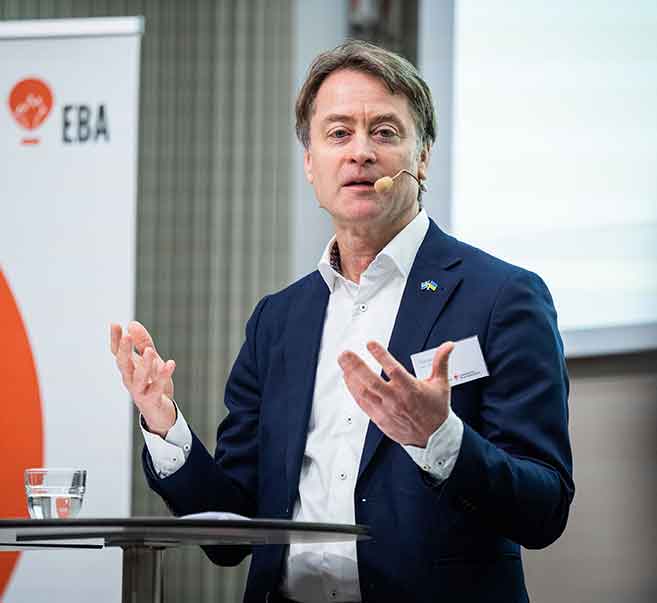
‘Research, evaluation, and proven experience are powerful tools for making better decisions about interventions, methods, and priorities. However, their value is only realised when this knowledge reaches decision-makers in a usable and actionable form’ says Becker. Photo: Caisa Rasmussen
The importance of inclusive institutions
Simon H. Johnson, a Nobel Prize winner and professor at MIT, emphasises the importance of inclusive and well-functioning institutions for long-term economic development and poverty reduction. He describes how poverty becomes entrenched in countries with political and economic institutions that favour a small elite at the expense of large sections of the population.
Kenya’s former finance minister and central bank governor, Njuguna Ndung’u, also highlights the importance of institutions.
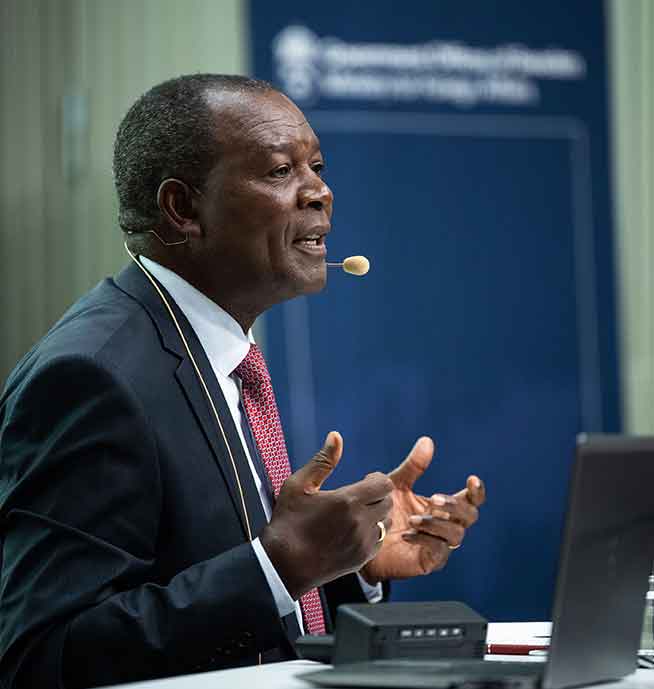
‘I get emotional when I talk about institutions because I have seen how important they are and what happens when they fail.’ Targeted aid can strengthen institutional capacity. So let’s do it! Let’s build capacity!’ says Ndung’u. Photo: Caisa Rasmussen
A new strategy for a new era?
Professor Rachel Glennerster, Director of the Centre for Global Development, emphasises the importance of making clear choices, and of strengthening aid decisions by systematically weighing up the costs, effects, and uncertainties involved. She also highlights the importance of using evidence at all stages of the aid process: to analyse and understand problems, identify solutions and strategies, and determine how initiatives should be implemented.
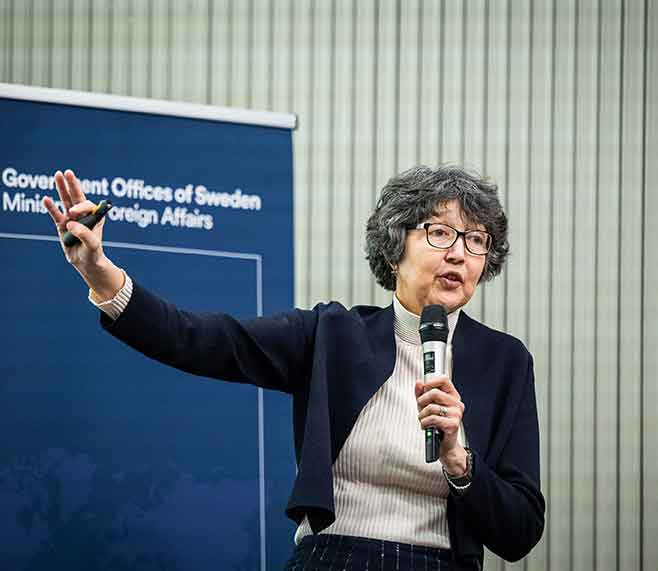
‘Aid has been hugely successful! The number of low-income countries has fallen dramatically, and we now have a real opportunity to eradicate poverty. However, we need a new strategy for this new era with fewer large-scale initiatives,’ says Glennerster. Photo: Caisa Rasmussen
Evidence in rapidly changing environments
Megan Kennedy Chouane (Head of OECD/DAC-EVAINet) describes how previous knowledge can be useful even when situations change rapidly. In such contexts, evidence often involves using available data and experience to make more informed decisions, even if the evidence base is limited or incomplete.
Professor Tymofiy Mylovanov, President of the Kyiv School of Economics, works in a rapidly changing environment and emphasises the importance of targeting aid not only at acute situations, but also at building capacity for the next crisis.
From analysis to practical use
Professor Martina Björkman Nyqvist (Stockholm School of Economics) emphasises that impact evaluations are at their most valuable when they demonstrate not only whether an intervention is effective, but also why. This requires clear theories of change, well-formulated objectives, and methods that can assess not only whether interventions are effective, but also how they affect different groups.
Professor Jos Vaessen, Chief Evaluation Officer at the World Bank’s Independent Evaluation Group, points out that evaluation methods must be adapted to changing aid priorities and complex contexts. He explains that combinations of quantitative and qualitative methods are often required to gain a comprehensive understanding, and that collecting data over time is essential for grasping long-term effects.
However, is evidence actually used to guide and implement aid? Professor Jörg Faust (Director of the German Institute for Development Evaluation (Deval)) argues that the use of evidence depends not only on the chosen method, but also on institutional capacity and the division of responsibility. Many researchers emphasise the importance of translating and adapting knowledge so that it can be used for governance and practical decision-making. Jillian Popkins, Chief Commissioner of the Independent Commission for Aid Impact, believes that striking a balance between learning and accountability is also important.
A forum for shared learning
On 19 February, government agencies, researchers, and international experts met in Stockholm for a conference on evidence-based aid. Organised by the Ministry for Foreign Affairs’ Department for International Development Cooperation and the Expert Group for Aid Studies (EBA), the conference was chaired by Minister for Aid and Foreign Trade, Benjamin Dousa. The aim was to deepen the dialogue within Team Sweden and create a shared understanding of how knowledge can inform the management and implementation of aid initiatives.